
Dental implants in Auburn, WA: cost, process, and what to expect
Dental implants in Auburn, WA are widely considered the gold standard for replacing missing teeth — a permanent solution that looks, feels, and functions like a natural tooth, right down to the root. Unlike dentures or bridges, an implant replaces the tooth root itself, which preserves jawbone and prevents the facial changes that follow tooth loss. This guide covers everything you need to understand: what implants are, the full step-by-step process, how much they cost, who’s a candidate, and how they compare to other options. At A2 Dental, we place implants and guide patients through every stage of the journey.
What is a dental implant?
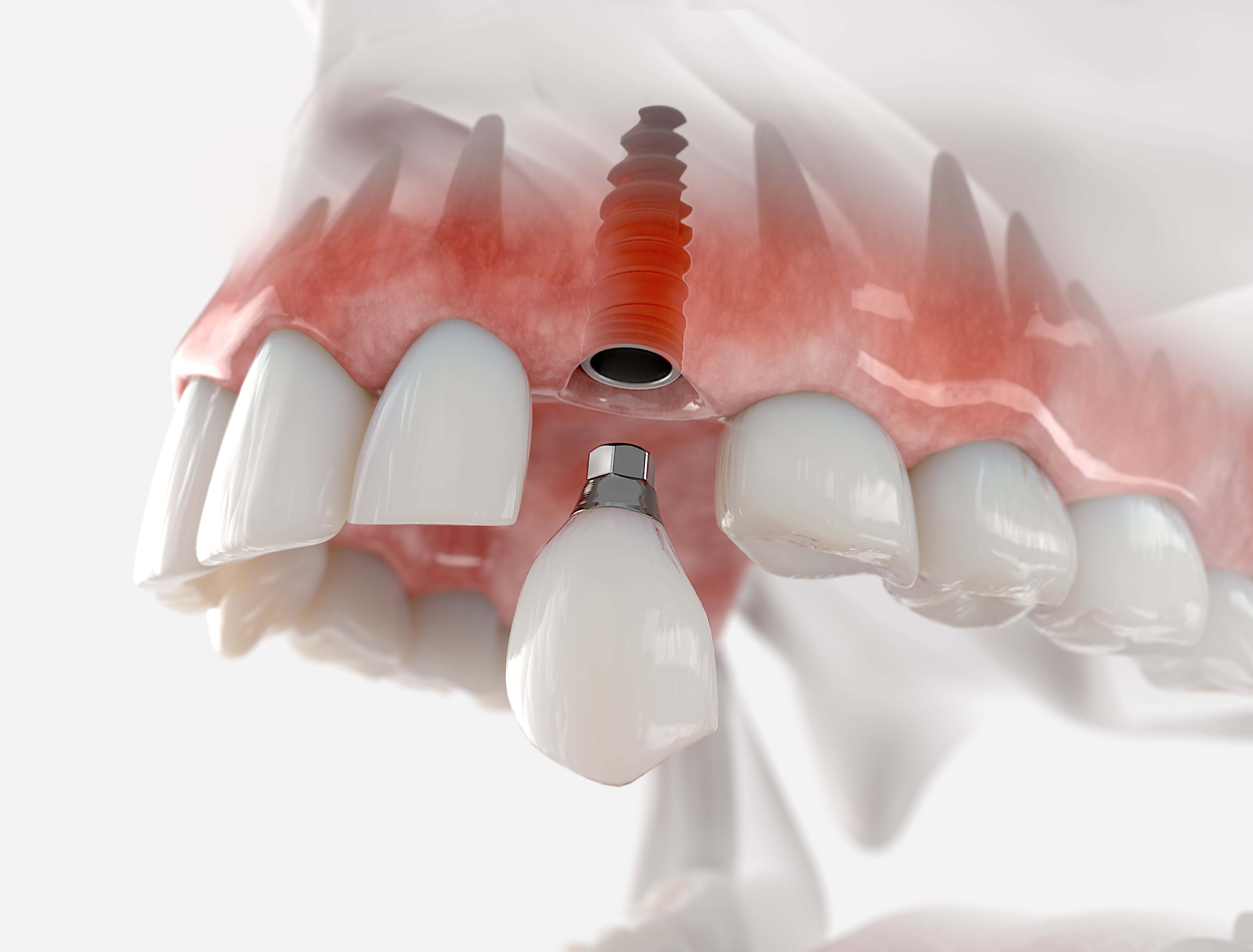
A dental implant is a small titanium post that functions as an artificial tooth root. It’s surgically placed into the jawbone, where it fuses with the surrounding bone over several months in a process called osseointegration. Once fused, the implant provides a permanent, stable foundation for a custom crown that’s attached on top.
A complete implant has three parts:
- The implant — the titanium post that integrates with the bone and replaces the root
- The abutment — a connector piece that attaches to the implant above the gumline
- The crown — the visible, custom-made replacement tooth, shade-matched to your natural teeth
Implants can replace a single tooth, several teeth, or anchor a full-arch restoration or implant-supported denture.
Why choose implants over other options?
The defining advantage of implants is bone preservation. When a natural tooth is lost, the jawbone no longer receives the stimulation that the tooth root once provided, and it begins to resorb — gradually shrinking. Over years, this changes the shape of the face and can cause neighboring teeth to shift. An implant is the only tooth replacement option that replicates the root’s function and stops this bone loss.
Compared with the alternatives, implants also:
- Don’t require grinding down healthy neighboring teeth the way a traditional bridge does
- Don’t slip, click, or require removal and adhesive like conventional dentures
- Let you eat, speak, and brush exactly as you would with natural teeth
- Routinely last 20 to 25 years or more with proper care
To weigh implants against the other choices, see our guides on dental implants vs. dentures and dental implants vs. bridges.
The dental implant process, step by step
One of the most common questions patients ask is what the process actually involves. While every case is different, most follow the same general path from consultation to final crown.
1. Consultation and planning
We start with a thorough exam and imaging — often including a 3D scan — to assess your jawbone, map the nerves and sinuses, and plan the precise placement of your implant. This is also when we review your medical history and confirm you’re a good candidate.
2. Extraction or bone grafting, if needed
If a damaged tooth still needs to be removed, we handle that first — see our guide on what to expect from a tooth extraction. If you’ve lost bone volume where the implant will go, a bone graft rebuilds the foundation. Both require healing time before placement.
3. Implant placement
The titanium post is placed into the jawbone in a single appointment. The area is fully numbed, and sedation options are available for patients who feel anxious. Most people are surprised by how manageable this step is.
4. Osseointegration
Over the next three to six months, the implant fuses with your bone, creating the stable foundation that makes implants so durable. A temporary restoration can often be worn during this period.
5. Abutment and final crown
Once integration is complete, the abutment is attached and your custom crown is placed — shade-matched to blend seamlessly with your natural teeth. At this point, your new tooth is fully functional.
How much do dental implants cost in Auburn, WA?
A single dental implant in Auburn typically costs between $3,000 and $5,000 when you account for the implant, abutment, and crown together. The range reflects differences in each patient’s needs — there’s no one-size-fits-all price.
Factors that affect the total include:
- Whether you need an extraction before placement
- Whether bone grafting is required to build adequate support
- The number of implants being placed
- The type of restoration — a single crown versus a full-arch or implant-supported denture
While implants cost more upfront than dentures or a bridge, they often prove more economical over time. Dentures need relining and replacement every five to ten years; a bridge typically needs replacing within ten to fifteen. An implant that lasts 25 years frequently costs less per year of service. We’ll provide a clear, itemized estimate and review any insurance or financing options at your consultation.
Am I a candidate for dental implants?
Most adults in good general health are candidates for implants. The key requirements are adequate jawbone to support the post and healthy gums. Even patients who’ve experienced bone loss can often qualify after a bone graft.
A few factors require extra consideration:
- Smoking slows healing and raises the risk of implant failure; many dentists ask patients to quit during the healing period
- Uncontrolled diabetes or certain immune conditions can affect healing and integration
- Significant bone loss may require grafting before an implant can be placed
The only way to know for certain is an evaluation, where we assess your bone, gums, and overall health and give you a clear answer.
How do I care for a dental implant?
Caring for an implant is refreshingly simple: treat it like a natural tooth. Brush twice a day, floss daily, and keep up with routine cleanings and exams. While the implant itself can’t decay, the surrounding gum and bone still need protecting from gum disease, which is the leading cause of long-term implant problems. With good hygiene and regular checkups, implants routinely last decades.
Frequently asked questions
Is getting a dental implant painful?
The placement is done under local anesthesia, so you won’t feel pain during the procedure — only pressure. Most patients report that recovery is more comfortable than they expected, with mild soreness managed by over-the-counter pain relief.
How long do dental implants last?
With proper care, implants routinely last 20 to 25 years or more. The crown on top may eventually need replacement due to normal wear, but the implant post itself is designed to be permanent.
How long is the whole process?
From placement to final crown, most cases take three to six months, driven by the time needed for the implant to fuse with the bone. Cases requiring extraction or grafting take longer.
Can implants replace all my teeth?
Yes. A small number of implants can anchor a full-arch restoration or an implant-supported denture, replacing a complete arch of teeth without a tooth-for-tooth implant.
Dental implants in Auburn, WA
If you’re missing one or more teeth and want a permanent, natural-feeling solution, dental implants may be the right choice. The first step is a consultation, where we’ll assess your situation and build a treatment plan around your needs, timeline, and budget. Learn more about our dental implant services and broader tooth replacement options, or contact A2 Dental to schedule your consultation in Auburn, WA. We’re welcoming new patients.
Schedule Your Visit
Whether you’re maintaining your oral health or exploring treatment options, our team at A2 Dentistry is here to help.